
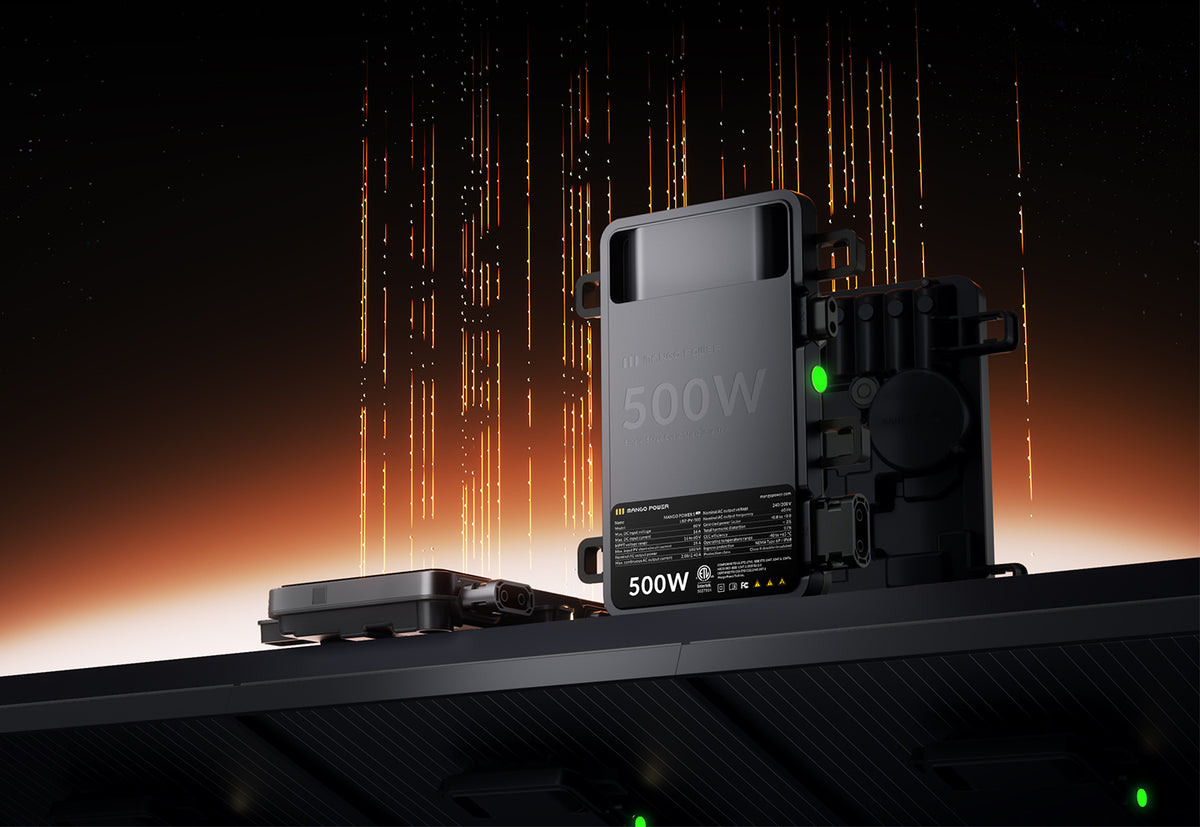

Article: How Plug In Solar Works
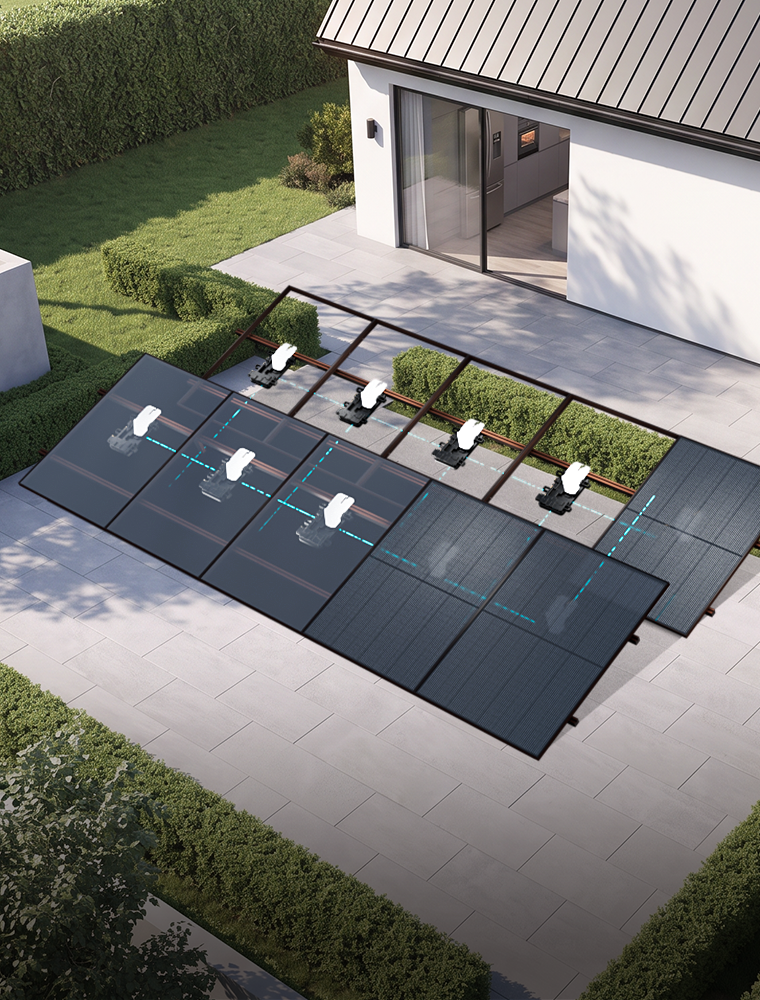
How Plug In Solar Works
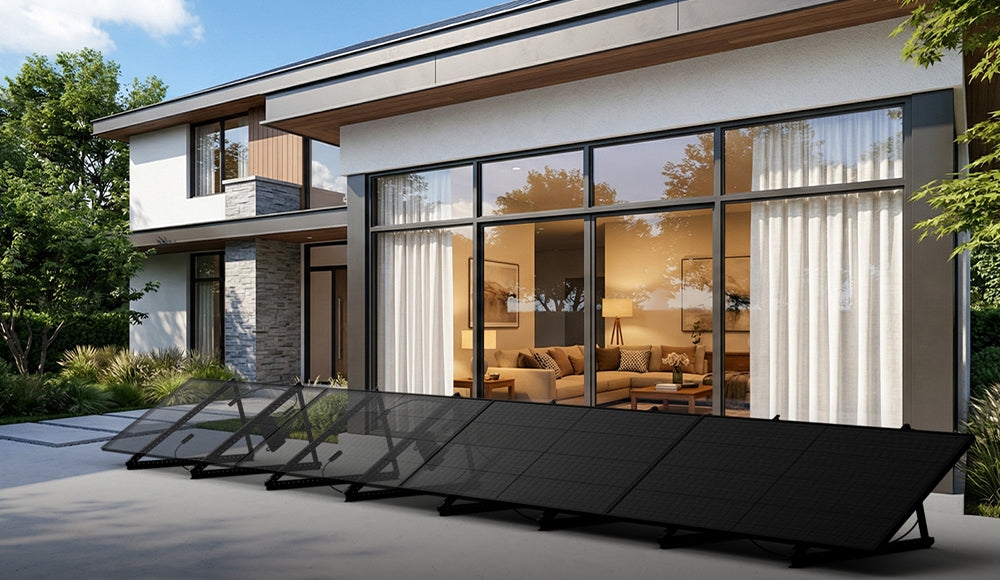
Mango Power S PIPV turns sunlight into grid-synchronized 120 V AC power close to the panels. The home uses available solar power as part of its live electricity supply, while Smart Gateway Lite measures energy at the service boundary and can support zero-export-capable control when correctly installed and configured.
(Electrical installation and utility interconnection may require a licensed electrician and local approval.)
The energy path in one minute
Sunlight reaches the photovoltaic cells. Each panel produces DC electricity. A microinverter mounted with that panel converts the DC into 120 V AC that follows the grid’s voltage and frequency. The converted power enters the home electrical system through the connection designed for the PIPV system. Household loads use the available solar power, and the utility supplies any remaining demand. If production would exceed the home’s demand, an installed and commissioned Smart Gateway Lite can command the system to limit export.
|
1
|
2
|
3
|
4
|
5
|
|
Sunlight reaches PV cells
|
Panel produces low-voltage DC
|
Microinverter converts and synchronizes AC
|
Home loads use available solar
|
Gateway monitors and can limit export
|
Step One: Turning More Sunlight into Solar Power
Every ray of sunlight is an opportunity to generate clean energy. When sunlight hits a solar panel, photovoltaic cells convert that energy into direct current (DC) electricity. But not all solar panels perform equally — especially when sunlight conditions are less than ideal.
That's why Mango Power S features advanced N-Type TOPCon solar cell technology, designed to deliver high energy conversion efficiency, excellent low-light performance, and long-term reliability.
Whether it's a bright summer afternoon, a cloudy morning, or the softer sunlight of early evening, our high-efficiency solar panels are engineered to capture more available solar energy throughout the day.
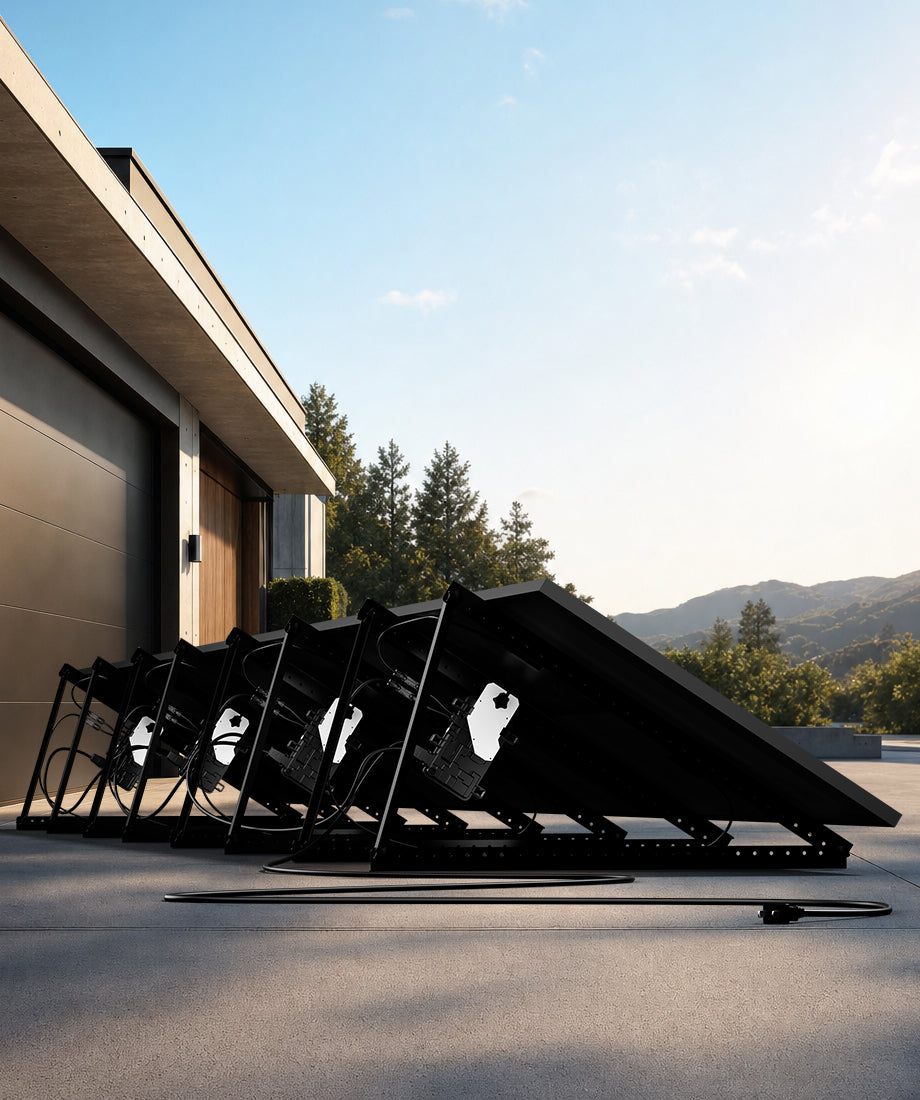
With four 300 W solar panels delivering a combined 1,200 W of rated DC capacity, Mango Power S helps homeowners make the most of their available installation space — turning everyday sunlight into clean, usable energy.
More energy from every ray of sunlight. More power from every square meter.
Step Two: Smarter Energy Harvesting, More Power from Every Panel
Imagine installing solar panels across your balcony, rooftop, or backyard. Some panels catch the morning sun, while others receive more sunlight in the afternoon. Trees, buildings, and changing weather can also create different shading conditions throughout the day.
With conventional string inverter systems, panels connected in the same string can affect each other's performance. But with Mango Power S, every panel works independently, allowing you to make the most of your available space, regardless of panel orientation or changing sunlight conditions.
How It Works
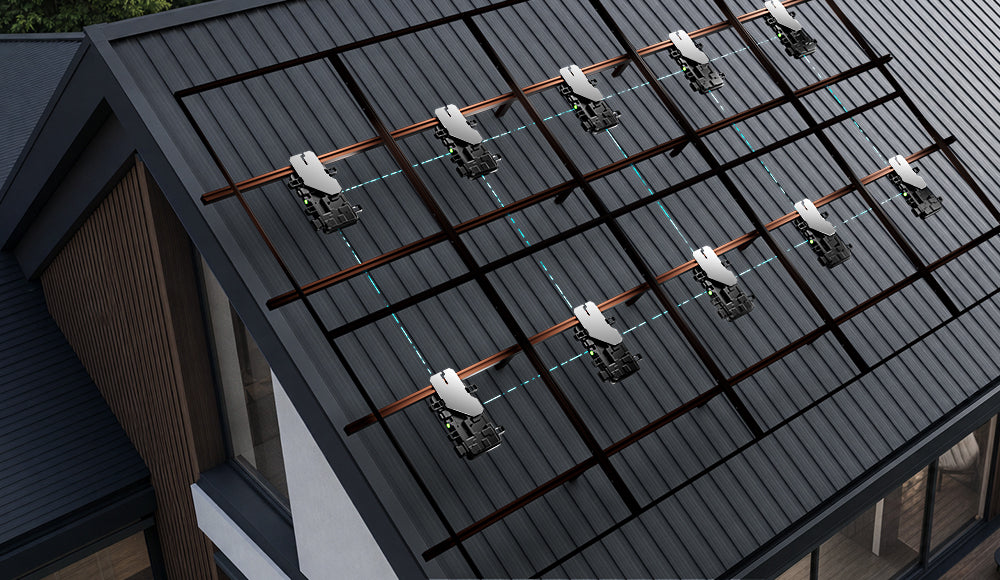
Once sunlight is converted into DC electricity, each Mango Power S microinverter independently finds the optimal operating point of its connected solar panel through Maximum Power Point Tracking (MPPT).
As sunlight conditions change, the microinverter continuously adjusts to extract the maximum available power from each panel. It then converts DC electricity into grid-synchronized AC power, ready to be used by your home.
This independent, panel-level architecture means that shading or reduced output from one panel won't drag down the performance of the others.
The Technology Behind It: Faster Tracking, Smarter Conversion
Mango Power S takes solar energy optimization further with two key innovations.
1. Next-Generation MPPT Algorithm — Faster Tracking, Maximum Energy Harvest
Our advanced MPPT algorithm is designed to identify and track each panel's maximum power point faster than conventional solutions, responding quickly to changing sunlight conditions.
With up to 99.9% MPPT tracking efficiency, Mango Power S helps ensure that more of the available solar energy is captured throughout the day — even when sunlight intensity varies.
2. Innovative Single-Stage Topology — Fewer Conversions, Less Energy Loss
Unlike conventional multi-stage inverter architectures, which process energy through multiple power conversion stages, Mango Power S features an innovative single-stage power conversion topology.
By converting solar DC power directly into grid-synchronized AC power through a single power conversion stage, this streamlined architecture reduces intermediate conversion losses and minimizes the number of power components required.
The result is a simpler, more efficient power conversion process that helps deliver more of the energy generated by your solar panels to your home.
Every panel optimized. Every watt maximized. More solar energy for your home.
Step Three: Plug In Solar, Power Your Home — Smart Energy Management Made Simple
How Can Solar Power from One Outlet Power Your Entire Home?
Imagine a sunny afternoon. Your refrigerator is running, your air conditioner is cooling the room, and your laptop is charging. Normally, all this electricity comes from the grid.
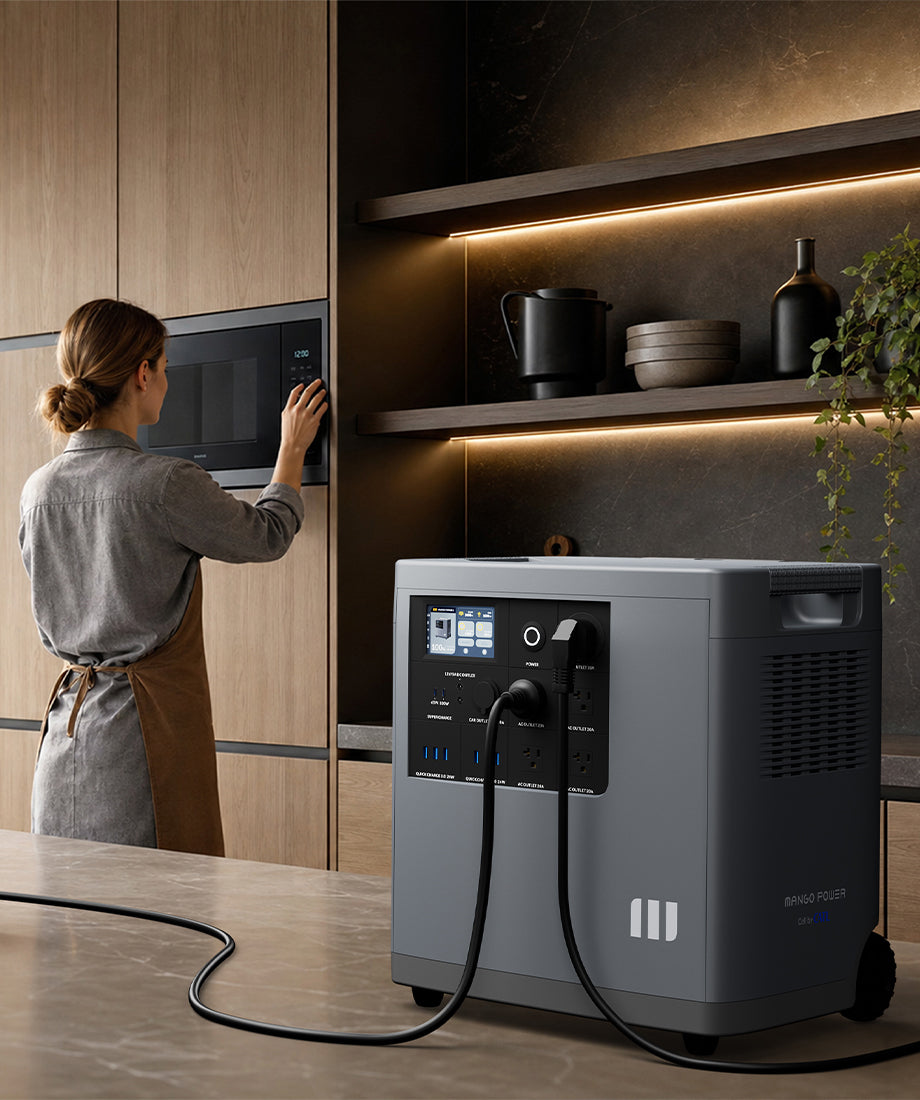
With Mango Power S, solar electricity enters your home's electrical system through an approved plug-in connection, helping power appliances across connected household circuits — not just the outlet where it's plugged in.
How It Works: Solar and Grid Power Working Together
Your home naturally balances solar generation and electricity from the grid. When solar production is lower than household demand, the grid supplies the difference.
| Everyday Scenario | Home Consumption | Solar Generation | Grid Power |
| Morning | 600 W | 350 W | 250 W imported |
| Midday | 1,500 W | 900 W | 600 W imported |
| Sunny afternoon | 300 W | 800 W | 500 W potential surplus |
| Cloudy afternoon | 900 W | 250 W | 650 W imported |
But what happens when your solar panels generate more electricity than your home needs?
That's where Mango Power Smart Gateway Lite comes in.
The Technology Behind It: Precision Control & Smart Connectivity
By connecting Mango Power S microinverters with Smart Gateway Lite, your system can monitor solar generation, household consumption, and electricity imported from or exported to the grid — all through the Mango Power App.
Powered by our advanced power control algorithm, the system dynamically adjusts solar output to match household demand, delivering anti-backflow response within 250 milliseconds to help prevent unwanted grid export.
Thanks to Wi-Fi Mesh connectivity, microinverters and the gateway communicate seamlessly, enabling coordinated energy management without complex communication wiring.
Safety is built in. If the utility grid goes down, certified anti-islanding protection automatically shuts off microinverter output. For zero-export configurations, loss of required gateway communication also triggers microinverter shutdown.
Flexible Solar for Different Household Needs
Want solar power to offset consumption on specific household circuits? Mango Power S supports flexible configurations through proper solar connection and Smart Gateway CT placement, allowing power management within a defined electrical boundary.
Whether you're managing selected circuits or monitoring your entire home, Mango Power S makes solar energy smarter, simpler, and more accessible.
https://www.youtube.com/watch?v=gfYUCTNA2I8
One Simple Connection. Whole-Home Solar Benefits. Intelligent Energy Control.
How the setup comes together
The owner-led portion begins with location, mounting, cable routing, and component assembly. The final scope depends on the jurisdiction and the home. Where the Smart Gateway Lite is used, a qualified electrician installs it at the main panel. Where a dedicated PIPV receptacle, circuit work, notification, permit, inspection, or utility approval is required, those items become part of the project before operation.
1. Confirm permission and local requirements before installation.
2. Choose a stable location with good sun, safe clearances, and an approved method for resisting wind and movement.
3. Inspect every component and follow the current Mango Power quick installation guide.
4. Assemble stands and secure each module without improvising hardware or altering the product.
5. Connect one PV module to its assigned microinverter and connect the AC module cables exactly as documented.
6. Have the electrician complete any panel, circuit, receptacle, and Smart Gateway Lite work that the project requires.
7. Complete permitting, notification, inspection, interconnection, or permission to operate when applicable.
8. Pair devices in the app, verify LED status, configure the gateway, and confirm correct L1 and L2 measurement.
9. Record serial numbers, approval documents, photographs, and commissioning results for future service.
https://www.youtube.com/watch?v=W-YTkfKbsOc&t=51s
Smart, Safe, and Ready for More
Mango Power S is designed to make plug-in solar simple, safe, and flexible for everyday homes. With UL 1741-certified anti-islanding protection, the microinverters automatically shut down during a grid outage to protect your home and utility workers. Paired with Smart Gateway Lite, the system enables intelligent home energy monitoring and zero-export control, using advanced power management algorithms and Wi-Fi Mesh connectivity to dynamically match solar generation with household demand. With anti-backflow response within 250 milliseconds and automatic shutdown upon loss of required gateway communication, Mango Power S helps maximize solar self-consumption while minimizing unwanted grid export.
For U.S. homes with 120/240V split-phase electrical systems, the current 120V Mango Power S connects to one electrical leg (L1 or L2). A future 240V split-phase solution is being developed to provide broader household coverage. And while Mango Power S is a grid-following system, integration with compatible grid-forming home batteries may enable solar generation during outages, subject to system compatibility. Mango Power is also developing a dedicated battery storage solution, bringing homeowners closer to solar energy independence, day and night.

Written by MangoPower


Leave a comment
This site is protected by hCaptcha and the hCaptcha Privacy Policy and Terms of Service apply.